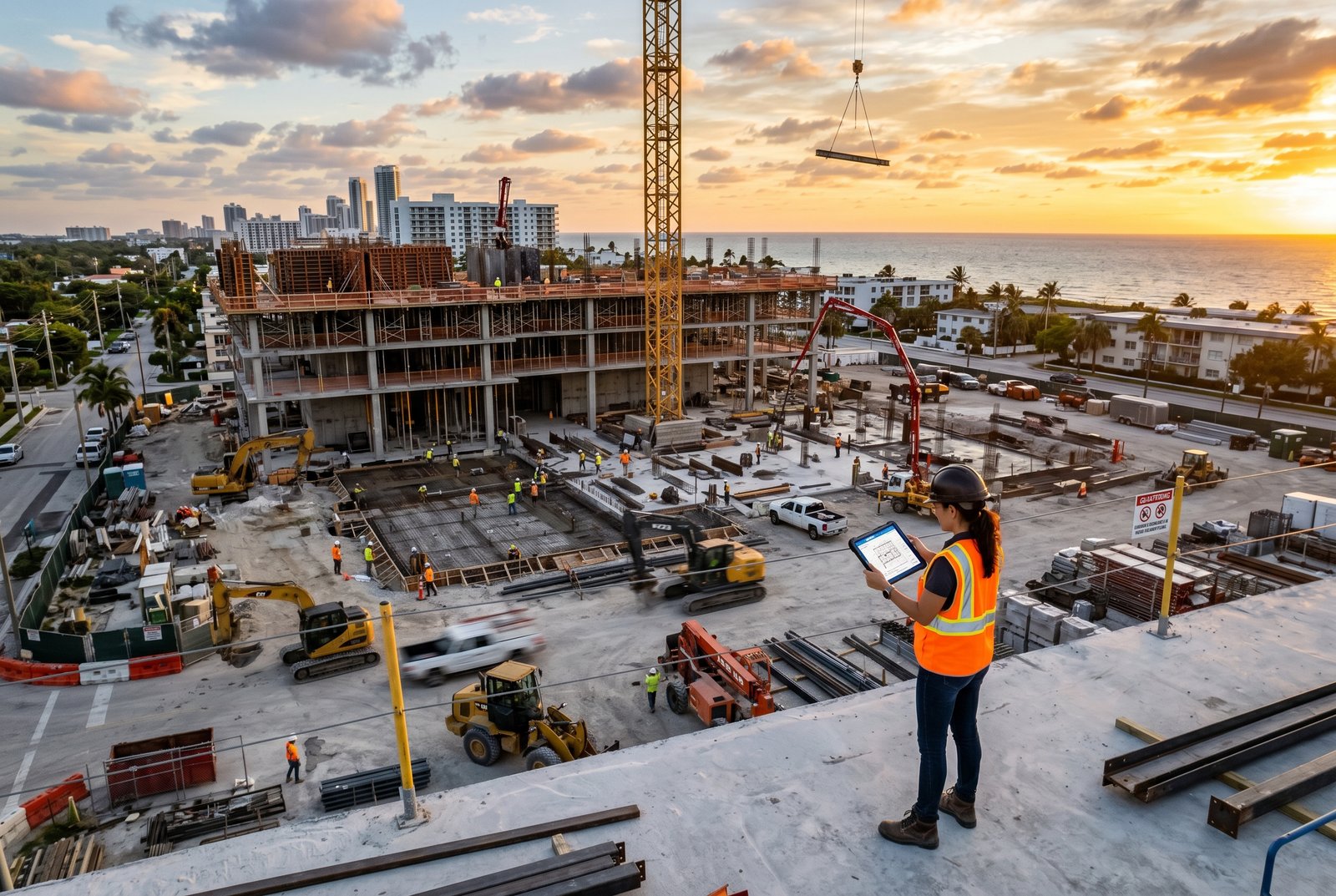
Construction projects in Florida move fast, and when teams lose visibility, small problems turn into expensive delays. That is one of the clearest reasons drone progress tracking has become such a practical tool for contractors, developers, owners, and project managers.
Traditional updates often depend on scattered phone photos, field notes, and site walks that do not show the full picture. Drone progress tracking changes that by creating a repeatable aerial record of the jobsite. With scheduled flights, teams can compare the site over time, communicate more clearly with stakeholders, and document conditions before disagreements become claims.
Why aerial progress tracking matters
Florida projects face weather pressure, compressed schedules, investor scrutiny, and constant coordination across trades. Aerial media helps solve a simple but costly problem: many decisions are being made without a clear visual record of what changed, when it changed, and how the site looked at key milestones.
With repeatable drone flights, teams can monitor site access, material staging, equipment movement, vertical progress, roof conditions, grading changes, and overall sequencing. That broader view is difficult to capture from the ground alone.
Better visibility for owners and stakeholders
Not every stakeholder can visit the site regularly. Owners, lenders, remote developers, and consultants often rely on summaries that leave too much to interpretation. Drone progress reports make updates easier to understand because they show current conditions clearly. Aerial images and video help non-field stakeholders see progress instead of guessing at it.
Stronger documentation and fewer disputes
One of the biggest benefits of progress tracking is documentation. Weekly or biweekly flights create time-stamped records that support payment applications, schedule discussions, change-order conversations, and dispute resolution. When a project team can point to clear imagery from a specific date, it becomes much easier to verify site conditions and completed work.
Safer site oversight
Drones also reduce the need to physically access certain elevated or active areas just to capture visuals. They do not replace inspections, but they do improve awareness and reduce unnecessary exposure when teams need a fast visual review of roofs, façades, large laydown areas, and site logistics.
More useful reporting rhythm
The real value comes from consistency. A single flight is helpful. A structured progress program is far more valuable. When the same site is documented from similar perspectives over time, project teams can build reports that are easier to compare, easier to share, and more useful for internal and external communication.
Why this matters specifically in Florida
Florida construction teams often manage weather-sensitive schedules, large developments, and stakeholders spread across multiple markets. Strong visual reporting helps keep everyone aligned. It also supports faster communication when storm prep, recovery documentation, or schedule adjustments become necessary.
Final takeaway
Drone progress tracking is not just a nice visual extra. It is a practical documentation and communication system that helps construction teams work with more clarity. For Florida builders, developers, and project stakeholders, that means better visibility, stronger records, and smarter decisions throughout the life of the project.
If your team needs cleaner construction reporting and dependable aerial documentation, Property HDR can help. Request a Quote.